Mastering AI for Business: Why Context Is King (And How to Stop Getting AI Slop )
AI is here to stay — and it’s far more than a quick way to Google answers. It excels at synthesizing information, generating targeted insights, creating images and videos, and increasingly, powering real organizational transformation. Personally, I’ve reaped huge benefits from AI for research, generative content, writing software and more. But here’s the key insight from my work as an Enterprise Business Architect, Process Designer, and AI App Builder: AI only delivers excellent results when it has excellent organizational context.
Over the past year, I’ve seen spectacular wins alongside plenty of “AI Slop” — generic, hallucinated, or off-target outputs. The difference between great results and mediocre ones boils down to four critical factors:
How you write the query — Clear, coherent language with precise terminology.
The quality of information provided — Context truly is king.
How you structure that information — Logical progression and organization matter.
The AI tool itself — Commercial/enterprise versions generally outperform free tiers with better reasoning and context handling.
Business Pattern Awareness
As someone who connects enterprise models with AI daily, I want tools that apply proven business patterns: standardizing processes, critiquing existing ones, suggesting data model improvements, and generating apps that nail workflow, dialogs, data validation, and UI design.

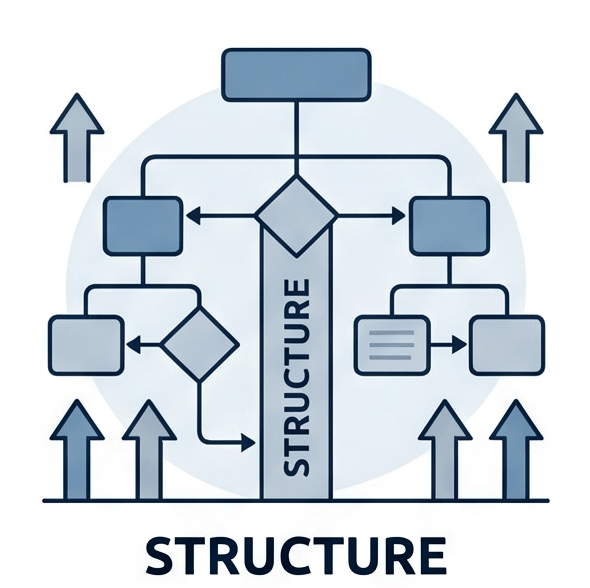
The Power of Structured Context
The way you structure queries — and even your workspace in tools like ChatGPT, Copilot, or Claude — directly shapes the maturity and relevance of outputs. One colleague, a lawyer with advanced innovation studies on a cyber-governance project, taught me this masterclass. He uses dedicated folders, consistent query naming conventions, iterative follow-ups, and even asks the AI for opinions on product definition and market placement. His methodical approach keeps him well ahead of the curve.
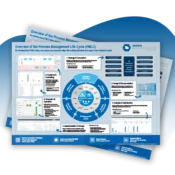
This principle played out dramatically over the Christmas break when a hyper-automation company designed a human-centred project management process using AI. I was involved in its first real deployment, and it worked beautifully — focusing on people, clarity, and adaptability rather than rigid checklists. Their success wasn’t luck; it stemmed from meticulously researched, well-structured instructions fed to the AI.
In that project, as the Business Architect and Process Expert, I leveraged AI to:
Suggest and draft key documents
Record, summarize meetings, and extract action items
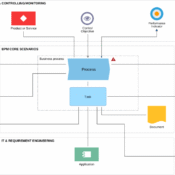
Digest procedural docs in ADONIS to auto-generate BPMN diagrams
Create new diagrams aligned with established business patterns and standards
Can AI Generate Perfect Software on the First Try?
In short: rarely. It’s usually not the AI’s fault — it’s our own biases, unspoken cultural assumptions, incomplete requirements, and the natural learning curve of any new platform. Early iterations reveal holes in our thinking. That’s why iterative development, user feedback, and strong foundational Business Architecture and Process Design are non-negotiable if you want enterprise grade results.
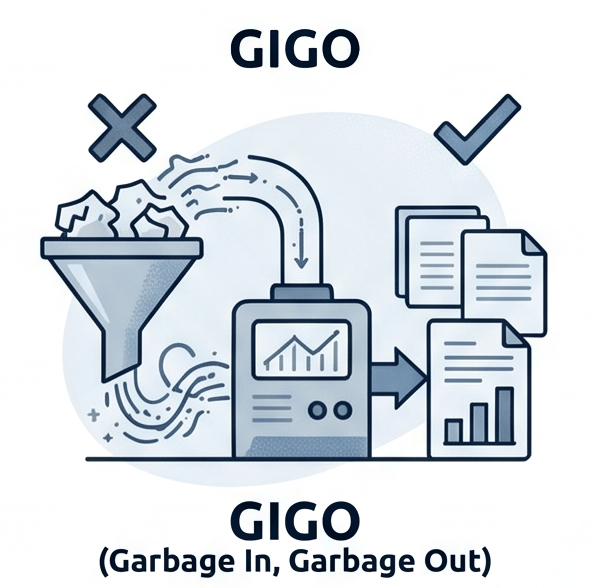
GIGO
AI follows the classic GIGO rule: Garbage In, Garbage Out. The better you structure the knowledge base (enterprise models, process libraries, standards, and patterns), the more accurate and context-aware the outputs become. This is exactly why my expertise in Business Architecture bridges the gap — turning strategy into operational models, workflows, and full app solutions.
The Link from Business Analysis to AI written Software
I have investigated several NO-CODE platforms with AI capability and some AI app builders too. What I’ve consistently found is the value of the structured language and approach that being a Business Analyst and Process Designer has taught me. I am putting some effort into developing a schedule and map based software package to evaluate these platforms and the results are very encouraging! Whichever platform I settle on, I’m convinced the business analysis skills I have are the major factor driving success in this effort.
Real-World Wins with ADONIS AI
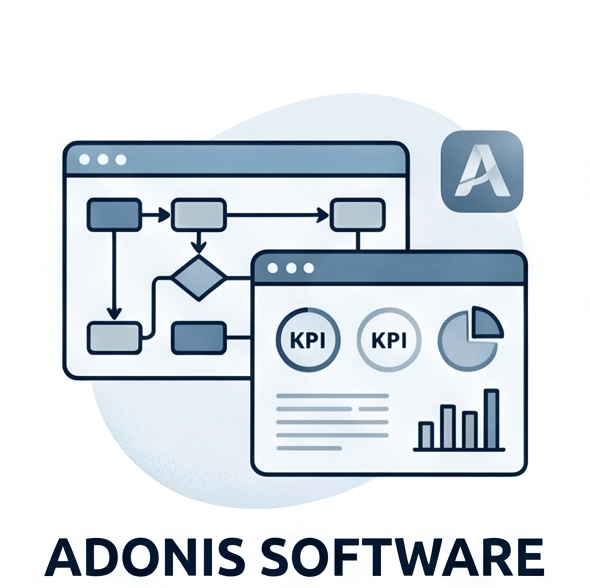
Those familiar with my work know I’m the Australian partner for the ADONIS process improvement platform. Its AI shines at turning work instructions into clean BPMN models (after stripping unnecessary clutter from docs). One of my favourite uses on a cyber-governance startup was drafting processes directly from standards bodies, then mapping my client’s processes to demonstrate compliance — a huge time-saver.
ADONIS AI also evaluates models for consistency, suggests improvements, and supports intelligent process optimization. With 2026 BPM trends leaning into hyper-automation, process intelligence, and agentic AI, tools like this are becoming essential.
I’ve professionally used four different AIs and continue exploring their capabilities. AI is bridging the technical skills gap I deliberately widened years ago when focusing on Business Architecture and Process Design. Today, it lets me move seamlessly from business strategy → architecture → operational design → executable workflows and apps.
Bring it on — the future is collaborative between human expertise and AI augmentation.
Ready to Work Smarter?
If you’re an organization looking to design smarter operations, leverage AI effectively, or implement human-centred processes, I’d love to help. As The Process Expert, I combine seasoned business architecture skills with practical AI know-how, and I always like to work with People, Processes and Technology!
Call me on +61 483 891 835 (Sydney/Melbourne/Hobart time, based in Launceston).
I travel for key workshops and use collaborative online tools for ongoing projects.

Interested in ADONIS?
Interested in the ADONIS platform for Australia or New Zealand? I offer guided tours, community editions, POCs, and pilot projects tailored to your needs. Reach out — let’s make AI work productively for your business.